At the end of 2005, the Royall House Association adopted a new Mission Statement and Strategic Plan designed to take the history and meaning of the Royall House and Slave Quarters into the future. Strategic Plan Statement (pdf).
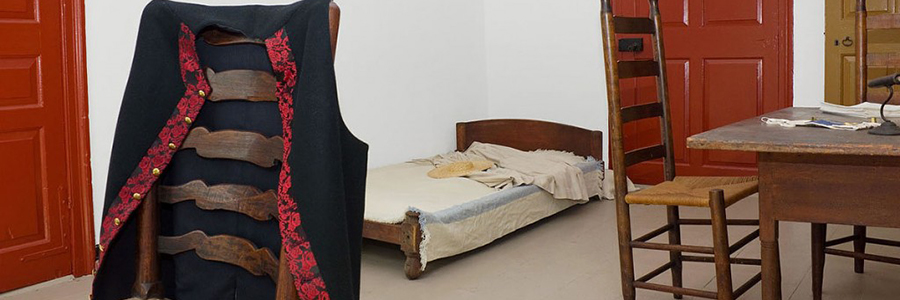
The home of one of the richest families in New England and the enslaved Africans who made their lifestyle possible. Architecture, furnishings, and artifacts bear witness to their entwined stories. The Home.
Isaac Royall never intended to abandon hearth and home. He just got caught on the wrong side of the Revolution. Royall Family History.
When the Royalls moved to Medford from Antigua, they brought 27 slaves with them. New England slavery was not benign. The Royall Slaves.
Regular public lectures cover a variety of topics on Colonial and Medford history, Northern slavery, and much more. Events.
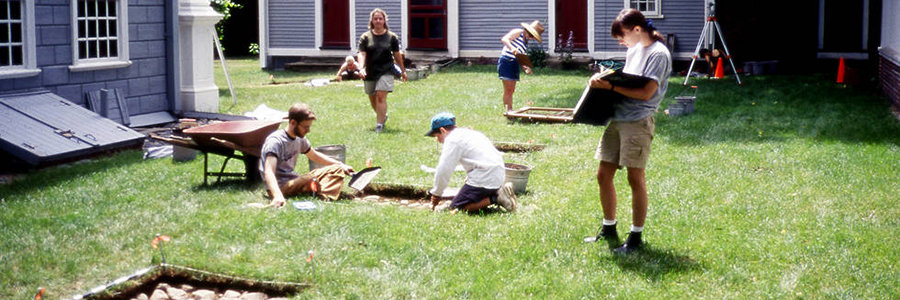
A full-scale dig has uncovered more than 5,000 objects from the Royall family and their slaves. The Dig.
The Royall House is part of "The Other Side". Isaac Royall was a Loyalist, or Tory, and remained loyal to King George III. The Tory Trail.
The Royall House and Slave Quarters are open for Tours from May 31 to October 26, 2008 -- weekends, 1 to 5 p.m. Group Tours may also be arranged for dates starting March 1, 2008. Pictured: the center hall of the Isaac Royall House.
Photo © Geoffrey Gross 2007. From Great Houses of New England; Rizzoli, 2008. Used by permission.
Visitor Guide.
Our beautiful grounds are available for rental. Have your special event at the Royall House. Rental information.
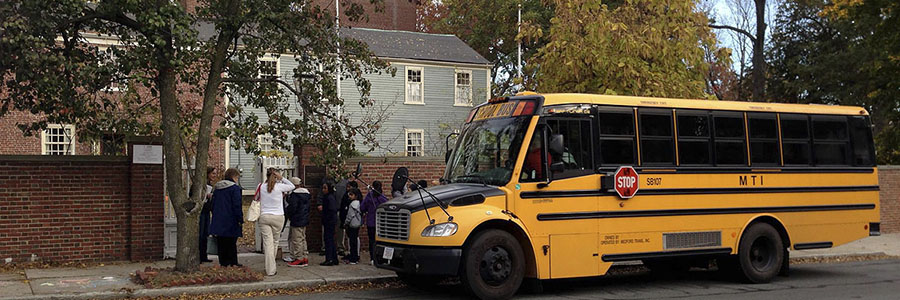
The Royall House and Slave Quarters are located at 15 George Street in Medford, Massachusetts. Detailed Map.
Medford Historical Society. Founded in 1896 to collect and preserve Medford history.
The Brooks Estate. Fifty acres of historic open space, two historic buildings.
Medford Historical Commission / Historic District Commission. Official city board for historic preservation and district issues.
This web site is funded in part by the Massachusetts Foundation for the Humanities.
West Façade, Royall House
Photo © Geoffrey Gross 2007. From Great Houses of New England; Rizzoli, 2008. Used by permission.
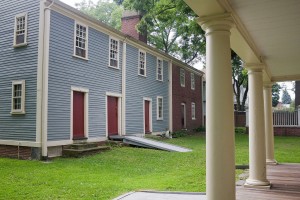
Slave Quarters
The Royall House and Slave Quarters were built in 1732-1739. The House is one of the finest 18th century buildings in New England; the Slave Quarters is the only such structure in the Northern United States. Both the buildings and grounds are a National Historic Landmark. Together, these unique structures tell the intertwined stories of liberty and bondage, independence and slavery, as they have been played out not only in Colonial times, but throughout American history.
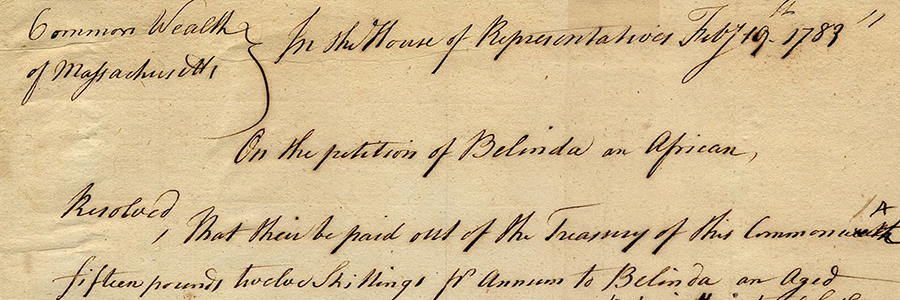
Among these stories is that of Belinda, one of the enslaved Africans owned by the Royalls; after their departure, she successfully petitioned the Massachusetts Legislature in 1783 for a pension. Of course, these stories played out in the context of the American Revolution. After the departure of the Royalls to England, General John Stark made the Royall House his headquarters in the first days of the Revolutionary War. General George Washington helped plan the siege of Boston from here.
For more information, see the Royall House and Slave Quarters.
After a decade-long effort to save the site, the Royall House Association (RHA) purchased the Royall House and Slave Quarters in 1908 and opened a house museum shortly thereafter. For a century the RHA has preserved this important historic site and told its important stories to the public.
On June 14, 2008, we held a Centennial Celebration on our beautiful grounds. Please see our list of Centennial Sponsors -- and In-kind Donors -- we thank each and every one of them for their support and look forward to the next century!
For more on the history of the Royall House Association, please see our Spring 2008 Newsletter.
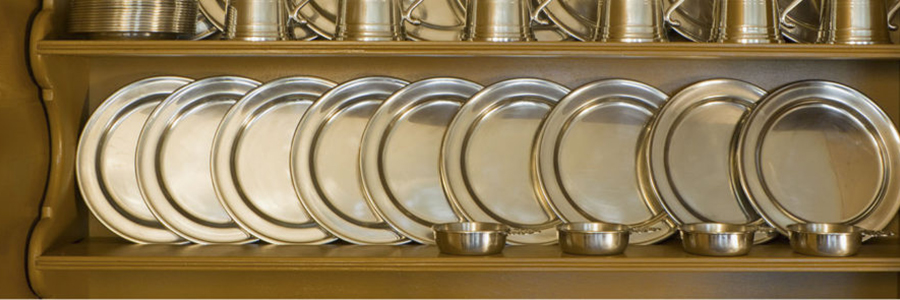
The Exhibit features compelling objects from the 18th century, discovered in a full-scale dig on our site. More Information.
Special thank you to the generous Sponsors of the Exhibit.
Sponsor list in pdf format.
Funding for this web site provided by the Massachusetts Foundation for the Humanities.